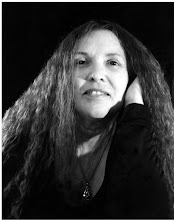
Just got this schedule from Lana and Joe for the pre-transplant testing.
It is going to be grueling to be sure....(please remember Lana & Joe live 90 miles away from the hospital itself so their days begin around 4 am). Also, many of these appointments take place in different buildings, sometimes on opposite sides of the MD Anderson campus. There are "shuttles" available in some sections but others Joe is literally pushing Lana in a wheelchair for a good mile to get from place to place. Quite a workout.
9/18/09 -
9am........Fast Track Lab Collection
11am.......Dr. "C" appointment
9/23/09 -
8am........Dental appointment
9am........ITT Pre-Procedure Assessment
9:45am...Blood/Speciment Collection
11am.......Echocardiogram
1pm.........Bone Marrow ASP/BX W/PreMed
9/24/09 -
7:10am.....Check In/Prep for CT Exam
7:40am....CT Scan, Head/Neck Area
9:15am.....Chest, PA & LAT
10am........Recipt HT/WT Storage Consent
10:30am...Dr. "C" appointment
11:30am...Business Center Follow-Up (the money people)
12:30pm...EKG - Resting
1:00pm.....Complete Pulmonary Function
2:00pm....Dr. "Co" appointment
9/25/09 -
8am..........Transplant Coordinator Visit
10am........Social Work Visit
2:15pm.....Stem Cell Pre-Admission Class
9/29/09 -
10:30am...Blood/Specimen Collection
11am.........Recipt HT/WT Storage Consent
11:30am...Dr. "C" appointment
9/30/09 -
8:30am....Subclavian Catheter Insertion (ouchie)
10/1/09 -
Scheduled Admission (more details to come)
10/7/09 -
Transplant
Monday, September 21, 2009


Wednesday, September 16, 2009
The Transplant
This morning at about 10:00 M. D. Anderson called Lana and told her that her bone marrow transplant has been scheduled. The donor is to donate the bone marrow on October 6th and it will be transplanted into Lana on the 7th. One day next week she will be admitted for preliminary testing and begin the process necessary for the transplant, chemotherapy etc. At last the waiting and uncertainty is finally over. Tomorrow she will need platelets again but we will go to Seton Medical Center in Austin for that. This week she has felt quite energetic for a change. She even walked into St. Marks here in La Grange Monday morning for her blood test instead of using a wheelchair.
Joe Mole
Wednesday, September 2, 2009
The Financial Assistance Process
July 16, 2009: The five page financial assistance package arrived from Tonya, of the Bone Marrow Transplant Finance Office. I filled it out and found all of the supporting documents that day and the next day.
July 30, 2009: Tonya called to say that it was incomplete. All of the income sources had to be verified as well as a copy of my birth certificate and Texas drivers license. This required calls to Social Security and my Union pension plan. The shock of hearing that our application had been rejected nearly gave me a heart attack.
August 8, 2009: The requested information arrived in the mail and I photocopied them. At this time I redid page one and three of the application.
August 11, 2009: Lana and I saw Tonya at M. D. Anderson and presented the additional information. At this time as we were talking about the application and the income sources and I mentioned where the "other" income came from. I was immediately told that the income donor had to sign a notarized statement saying they were the giver.
August 12, 2009: the donor faxed the required statement to Tonya.
Unknown Date, but between the 12th and the 18th: Someone called my bank and asked for my balance. Mind you I had to sent them four months of bank statements. They were given my balance as of that minute.
August 18, 2009: the "Denied" letter was typed but not mailed.
August 25, 2009: Lana and I saw Tonya again and in a very low, soft voice she read a short blurb at the bottom of the application:
"Your application has been approved for $500,000 for a transplant. You will be required to pay $11,600.00 in cash." Neither Lana or I remembered the amount correctly, but we did say that we would be back in Houston in one week. ( In fairness to Tonya, I admit that I am hard-of-hearing.) But we were not in a position to pay that amount on the spot. Money market stocks had to be cashed in.
August 26, 2009: I went to my stock broker and signed the necessary forms.
August 27, 2009: The Denial letter was mailed by Elvira at MD Anderson.
August 28, 2009: The money market check arrived in the mail from Edward Jones.
August 29, 2009: Lana and I received the Denial letter. Just a short while after receiving the letter I called my daughter, Colleen.
She immediately fired off emails to: The American Cancer Society, Senator Kay Bailey Hutchison and Congressman Lloyd Doggett. Colleen was aware that the Senator and Congressman were acquainted with me, and she felt they could be of some help. They both had copies of my book "The Saga of Old La Grange".
September 1, 2009: Lana had an appointment with her transplant surgeon. I had forgotten to take my checkbook with me. We also did not know the status of our financial assistance application other than it was denied. We again saw Tonya. Both the surgeon and Tonya said that the money needed to be paid before the application would be approved. We only had an approximate idea of the amount. I asked for the exact amount. She made a phone call and said the amount was: $11,619.05. I asked her to please write it down for me. She did. Lana, Tonya and I went to the finance office together and I presented my debit card. "Sorry we cannot take an debit card," was the answer. "That's all right" I replied, "I will return tomorrow with a check."
September 2, 2009: At three in the morning I had the thought that I should not write a personal check but rather get a certified check at the bank. Lana was adamantly opposed to my getting a certified check, saying that she did not have time to waste. I did not listen but rather left twenty minutes early to go to the bank which opened at 9:00am. It only took five minutes for them to make out the check and three more minutes for me to photocopy it when I got home.
We arrived at M. D. Anderson at 10:50am, parked the car, put Lana in a wheelchair and took the sky bridge to the Main Building. Who should be standing just inside the door of this mammoth facility but Lana's surgeon. She immediately took the certified check out of the envelope and waived it for him to see. He was talking on the phone but smiled and gave her a thumbs-up. Now we knew everything would be OK.
Lana and I went alone to the finance office and gave them the check. The teller did not know what to do with it since we had a zero balance. I explained that it was front money for a transplant. She made a phone call, seemed satisfied and processed our check. She was pleased that it was a certified check. There would be no waiting until it cleared our bank. She gave ma a receipt and I asked for two additional copies, one for Tonya and one for the transplant coordinator. We went to the 8th floor, transplant department and asked them to call Tonya and the transplant coordinator, that we would meet them in the waiting room. Five minutes later Tonya arrived, this time she was all smiles. That too was reassuring. I gave her a copy of the receipt and she said she would give the other woman hers as well. Finally we were officially approved. They mentioned that the donor would be called immediately.
Sunday, August 30, 2009
UPDATE -
A Death Sentence delivered with the morning mail.
Yesterday, August 29th, we received in the mail a letter from MD Anderson Hospital saying that our application for financial assistance had been denied. The only explanation for their decision was a little check box marked "Does not meet criteria".
The Illness - or "How many doctors and bundles of cash does it take to get the correct diagnosis?"
Shingles?
In late January 2007 Lana became weak for no apparent reason. Earlier she had had a bout of shingles but it seemed to go away with medication.
Flu?
On February 3, 2007 we went to Home Depot and bought 12 sheets of ¼ inch thick luean plywood to install under the new bamboo flooring. I put it in the bathroom which is just outside our bedroom door. The next morning Lana became very ill. I took her to the local doctor who takes care of the run-of-the-mill doctoring in the community. By coincidence on that day all of his other patients were coming down with the flu. Lana’s treatment was the same. She did not respond.
Myeloproliferative Disorder?
A day or two later we returned and he ordered a blood test. When the results came later in the afternoon he asked her to come in. She could barely walk. When he discovered that she had a very low hemoglobin level he immediately sent her to an oncologist. An ambulance was called and Lana was rushed to the Seton Medical Center in Austin, Texas. She needed two units of whole blood. They kept her for three days to try and evaluate what might have caused her to suddenly loose red blood cells. They couldn’t find anything then. The oncologist called her condition myeloproliferative disorder, as her white blood cell count was very high. While she was at Seton they did a bone marrow biopsy and it did not show any abnormal activity at this time.
Non-Lupoid Autoimmune Disorders?
The high white blood cell count caused numerous problems with her body. The fatty tissue behind her right eyeball became so inflamed one night that in the morning her eye protruded ½ inch and was immovable. We immediately went to an eye surgeon who ordered an MRI of her head. For the following year Lana’s eye problems were monitored by the most prestigious team of eye surgeons in Austin.
The next thing affected by the raging inflammation in her body was her thyroid glands. They both had tumors. We found a specialist in College Station, Texas who informed her after more than one visit that her thyroid glands were the victim of whatever was causing her problem.
The next thing were all of her joints were becoming inflamed and very painful. An infectious disease specialist was called and by this time we had four months of weekly blood tests. He asked Lana a hundred questions, carefully examined all of the blood tests and made several phone calls. His conclusion at this time was that Lana did not have cancer or leukemia but she did have one of four non-lupoid autoimmune disorders which he could not immediately determine.
For the next eighteen months Lana began seeing a rheumatologist in College Station. Her condition seemed to stabilize and only occasionally did she need blood. In the beginning her platelet count was in the 600 range. That is very high. All the while her red blood count remained on the low side. Then for some unexplained reason her platelets began to disappear. In the spring of 2008 they dropped to 38. Normal is at least 130. Her rheumatologist ordered her first infusion of platelets. Two or three more times in 2008 she needed platelets as well. All during 2008 she had red blood transfusions just 4 or 5 times.
Myelodisplactic Syndrome?
In January of this year Lana could no longer produce her own platelets or red blood cells and her oncologist ordered another bone marrow biopsy. This time it showed myelodisplactic syndrome. Chemotherapy was begun immediately but proved totally ineffective. We were told that Lana had only two years to live without having a bone marrow transplant. This had to be done at M. D. Anderson Cancer Center in Houston. I went online and immediately registered Lana as a patient. About two weeks later we had a visit with the transplant surgeon.
The first step was to put her in the hospital and give her massive doses of chemotherapy. She was kept in reverse isolation for the next 29 days. All the while she had no less than six bags being infused day and night. A central venous catheter, CVC was installed in her lower right arm. I needed to officially learn to be her “Caregiver”. This required classes and being tested by an RN who was quick to point out any deviation from the accepted procedure.
When we began going to Anderson we had adequate insurance coverage to take care of the cost of a “Family Transplant”. The cost would be $270,000.00. That was in April. The bill for the first 29 days was $160,000, $46,000 was for medications, blood and platelets.
Lana came home for the next month while the chemo did its job of killing all of her white blood cells. Several more bone marrow biopsies were ordered. Then she was admitted again for a second round of chemo. It lasted only five days and she was discharged. This is when the problems really started. About a week or two later while we were back at M. D. Anderson Lana began to vomit. She also had diarrhea. She was given bags to throw up in while she lay on a sofa in the aisle just outside of the B elevators. We were waiting for her 2:00pm appointment to have a unit of platelets. Later, about 5:00pm she was discharged. The trip between La Grange and Houston is 105 miles and normally about 2 ½ hours. When I got her home she went straight to bed. She was very weak. The vomiting continued as well as the diarrhea.
Neuprogenic Fever.
At 11:00 the next morning Lana called me and said, “I need help now”. We had already had several very bad experiences with the local ER. I did not want her to go there. It would take them anywhere from 2 to 6 hours to determine what they should do. This waiting period is called “triage”. They don’t take the patient’s or caregiver’s word for anything. I immediately went to the RN’s who did her blood tests and asked what I should do. I was told to go to the ER. “Lana doesn’t have time for that,” I replied. “What if I ask one of the doctors that she goes to here in La Grange?” “They will want to see her first,” was the reply. I did go quickly to the clinic where Lana had been two months earlier. I left a detailed message with the receptionist and left. I had no sooner arrived home than the doctor called. He said to meet the nurses at the front door of the hospital, they would be waiting for her. Ten minutes later Lana was in a bed with an IV in her CVC port. They also gave her antibiotics. What we hadn’t checked at home was her temperature. She had a fever of 101. Six hours later Lana was put in an ambulance and taken to Seton in Austin. I did not follow but rather waited until the morning. Lana was gravely ill. The name for her condition was the “neuprogenic fever”. Antibiotics have no effect on this type of fever. It is caused by not having any white blood cells. Lana’s white blood cell count that day was 0.01. The fever lasted eleven days. On the second day her oncologist told her that one out of four patients who have this reaction to chemotherapy die, and that I had made the right decision not to let the ER touch her. He also credited the local doctor for his cooperation and correct treatment for this condition. Mainly that she have fluids and to send her to where she could get the proper care. Lana stayed at Seton for 22 days and the bill for this stay was $98,000.
Acute Myelogenous Leukemia.
When she was discharged from Seton we went back to M. D. Anderson. They ordered another bone marrow biopsy this time her diagnosis was “Acute Myelogenous Leukemia”. They also ordered a third round of chemotherapy. It would be milder this time. We has additional visits with the transplant surgeon. He was happy with Lana’s condition. She was exactly where she should be for a transplant but there was a problem. We no longer had enough insurance in our plan to cover it.
Lifetime Benefit Maximum.
My $500,000 lifetime family health care limit was set in 1980. It has never been increased. I am retired now and it is not possible for me to change plans as our medications are covered by Medco. I am afraid even to call Blue Cross to see what, if any, coverage remains.
Poor (but not poor enough).
Forms were mailed to us for “Financial Assistance”. They wanted to know where every penny came from for the last three years. We also had to verify that we were American citizens and legal residents of Texas. Weeks went by and one day I got a call from the woman in charge of our case. I had filled out the forms incorrectly plus she needed an additional 6 items of information. I was an emotional “basket case”. Whether Lana lived or died now depended entirely on me. Could I satisfy them? A week later the answer was again NO. There was still another item that had to be verified. Fortunately I was able to have it taken care of the next day. The application was now complete.
All of 2009, from January to now, August 24th, Lana has had at least 25 two unit blood transfusions and fifty platelet infusions. Blood costs approximately $2400 per unit and platelets $1600 per unit. Her monthly bill for medications is somewhere between $5000 and $6000.
Old (but not old enough).
December 1st Lana will be eligible for Medicare. That will solve some of her financial problems but if the transplant does not take place by then she will be ineligible, too old.
August 25th, we see the transplant surgeon again and are hopeful that he will have the authority to proceed with the transplant. Lana and I have just returned from her Monday blood test. Her platelets are at 12 and her nose has begun to bleed. We are at this very moment waiting for a call to go to Austin for platelets. This is always an all day affair.
Cash for Clunkers (a silver lining).
Last Friday on the way to Austin, again for platelets, the transmission of our car began to go out. I stopped at my local GM dealer on the way home. Two days remained in the Cash for Clunkers program. I saw that as an opportunity, as my Buick Estate Wagon was now 13 ½ years old. Fortunately no money was involved. Sign here and pay 72 monthly payments. I didn’t need more payments now but had no choice in the matter.
In late January 2007 Lana became weak for no apparent reason. Earlier she had had a bout of shingles but it seemed to go away with medication.
Flu?
On February 3, 2007 we went to Home Depot and bought 12 sheets of ¼ inch thick luean plywood to install under the new bamboo flooring. I put it in the bathroom which is just outside our bedroom door. The next morning Lana became very ill. I took her to the local doctor who takes care of the run-of-the-mill doctoring in the community. By coincidence on that day all of his other patients were coming down with the flu. Lana’s treatment was the same. She did not respond.
Myeloproliferative Disorder?
A day or two later we returned and he ordered a blood test. When the results came later in the afternoon he asked her to come in. She could barely walk. When he discovered that she had a very low hemoglobin level he immediately sent her to an oncologist. An ambulance was called and Lana was rushed to the Seton Medical Center in Austin, Texas. She needed two units of whole blood. They kept her for three days to try and evaluate what might have caused her to suddenly loose red blood cells. They couldn’t find anything then. The oncologist called her condition myeloproliferative disorder, as her white blood cell count was very high. While she was at Seton they did a bone marrow biopsy and it did not show any abnormal activity at this time.
Non-Lupoid Autoimmune Disorders?
The high white blood cell count caused numerous problems with her body. The fatty tissue behind her right eyeball became so inflamed one night that in the morning her eye protruded ½ inch and was immovable. We immediately went to an eye surgeon who ordered an MRI of her head. For the following year Lana’s eye problems were monitored by the most prestigious team of eye surgeons in Austin.
The next thing affected by the raging inflammation in her body was her thyroid glands. They both had tumors. We found a specialist in College Station, Texas who informed her after more than one visit that her thyroid glands were the victim of whatever was causing her problem.
The next thing were all of her joints were becoming inflamed and very painful. An infectious disease specialist was called and by this time we had four months of weekly blood tests. He asked Lana a hundred questions, carefully examined all of the blood tests and made several phone calls. His conclusion at this time was that Lana did not have cancer or leukemia but she did have one of four non-lupoid autoimmune disorders which he could not immediately determine.
For the next eighteen months Lana began seeing a rheumatologist in College Station. Her condition seemed to stabilize and only occasionally did she need blood. In the beginning her platelet count was in the 600 range. That is very high. All the while her red blood count remained on the low side. Then for some unexplained reason her platelets began to disappear. In the spring of 2008 they dropped to 38. Normal is at least 130. Her rheumatologist ordered her first infusion of platelets. Two or three more times in 2008 she needed platelets as well. All during 2008 she had red blood transfusions just 4 or 5 times.
Myelodisplactic Syndrome?
In January of this year Lana could no longer produce her own platelets or red blood cells and her oncologist ordered another bone marrow biopsy. This time it showed myelodisplactic syndrome. Chemotherapy was begun immediately but proved totally ineffective. We were told that Lana had only two years to live without having a bone marrow transplant. This had to be done at M. D. Anderson Cancer Center in Houston. I went online and immediately registered Lana as a patient. About two weeks later we had a visit with the transplant surgeon.
The first step was to put her in the hospital and give her massive doses of chemotherapy. She was kept in reverse isolation for the next 29 days. All the while she had no less than six bags being infused day and night. A central venous catheter, CVC was installed in her lower right arm. I needed to officially learn to be her “Caregiver”. This required classes and being tested by an RN who was quick to point out any deviation from the accepted procedure.
When we began going to Anderson we had adequate insurance coverage to take care of the cost of a “Family Transplant”. The cost would be $270,000.00. That was in April. The bill for the first 29 days was $160,000, $46,000 was for medications, blood and platelets.
Lana came home for the next month while the chemo did its job of killing all of her white blood cells. Several more bone marrow biopsies were ordered. Then she was admitted again for a second round of chemo. It lasted only five days and she was discharged. This is when the problems really started. About a week or two later while we were back at M. D. Anderson Lana began to vomit. She also had diarrhea. She was given bags to throw up in while she lay on a sofa in the aisle just outside of the B elevators. We were waiting for her 2:00pm appointment to have a unit of platelets. Later, about 5:00pm she was discharged. The trip between La Grange and Houston is 105 miles and normally about 2 ½ hours. When I got her home she went straight to bed. She was very weak. The vomiting continued as well as the diarrhea.
Neuprogenic Fever.
At 11:00 the next morning Lana called me and said, “I need help now”. We had already had several very bad experiences with the local ER. I did not want her to go there. It would take them anywhere from 2 to 6 hours to determine what they should do. This waiting period is called “triage”. They don’t take the patient’s or caregiver’s word for anything. I immediately went to the RN’s who did her blood tests and asked what I should do. I was told to go to the ER. “Lana doesn’t have time for that,” I replied. “What if I ask one of the doctors that she goes to here in La Grange?” “They will want to see her first,” was the reply. I did go quickly to the clinic where Lana had been two months earlier. I left a detailed message with the receptionist and left. I had no sooner arrived home than the doctor called. He said to meet the nurses at the front door of the hospital, they would be waiting for her. Ten minutes later Lana was in a bed with an IV in her CVC port. They also gave her antibiotics. What we hadn’t checked at home was her temperature. She had a fever of 101. Six hours later Lana was put in an ambulance and taken to Seton in Austin. I did not follow but rather waited until the morning. Lana was gravely ill. The name for her condition was the “neuprogenic fever”. Antibiotics have no effect on this type of fever. It is caused by not having any white blood cells. Lana’s white blood cell count that day was 0.01. The fever lasted eleven days. On the second day her oncologist told her that one out of four patients who have this reaction to chemotherapy die, and that I had made the right decision not to let the ER touch her. He also credited the local doctor for his cooperation and correct treatment for this condition. Mainly that she have fluids and to send her to where she could get the proper care. Lana stayed at Seton for 22 days and the bill for this stay was $98,000.
Acute Myelogenous Leukemia.
When she was discharged from Seton we went back to M. D. Anderson. They ordered another bone marrow biopsy this time her diagnosis was “Acute Myelogenous Leukemia”. They also ordered a third round of chemotherapy. It would be milder this time. We has additional visits with the transplant surgeon. He was happy with Lana’s condition. She was exactly where she should be for a transplant but there was a problem. We no longer had enough insurance in our plan to cover it.
Lifetime Benefit Maximum.
My $500,000 lifetime family health care limit was set in 1980. It has never been increased. I am retired now and it is not possible for me to change plans as our medications are covered by Medco. I am afraid even to call Blue Cross to see what, if any, coverage remains.
Poor (but not poor enough).
Forms were mailed to us for “Financial Assistance”. They wanted to know where every penny came from for the last three years. We also had to verify that we were American citizens and legal residents of Texas. Weeks went by and one day I got a call from the woman in charge of our case. I had filled out the forms incorrectly plus she needed an additional 6 items of information. I was an emotional “basket case”. Whether Lana lived or died now depended entirely on me. Could I satisfy them? A week later the answer was again NO. There was still another item that had to be verified. Fortunately I was able to have it taken care of the next day. The application was now complete.
All of 2009, from January to now, August 24th, Lana has had at least 25 two unit blood transfusions and fifty platelet infusions. Blood costs approximately $2400 per unit and platelets $1600 per unit. Her monthly bill for medications is somewhere between $5000 and $6000.
Old (but not old enough).
December 1st Lana will be eligible for Medicare. That will solve some of her financial problems but if the transplant does not take place by then she will be ineligible, too old.
August 25th, we see the transplant surgeon again and are hopeful that he will have the authority to proceed with the transplant. Lana and I have just returned from her Monday blood test. Her platelets are at 12 and her nose has begun to bleed. We are at this very moment waiting for a call to go to Austin for platelets. This is always an all day affair.
Cash for Clunkers (a silver lining).
Last Friday on the way to Austin, again for platelets, the transmission of our car began to go out. I stopped at my local GM dealer on the way home. Two days remained in the Cash for Clunkers program. I saw that as an opportunity, as my Buick Estate Wagon was now 13 ½ years old. Fortunately no money was involved. Sign here and pay 72 monthly payments. I didn’t need more payments now but had no choice in the matter.
Subscribe to:
Posts (Atom)